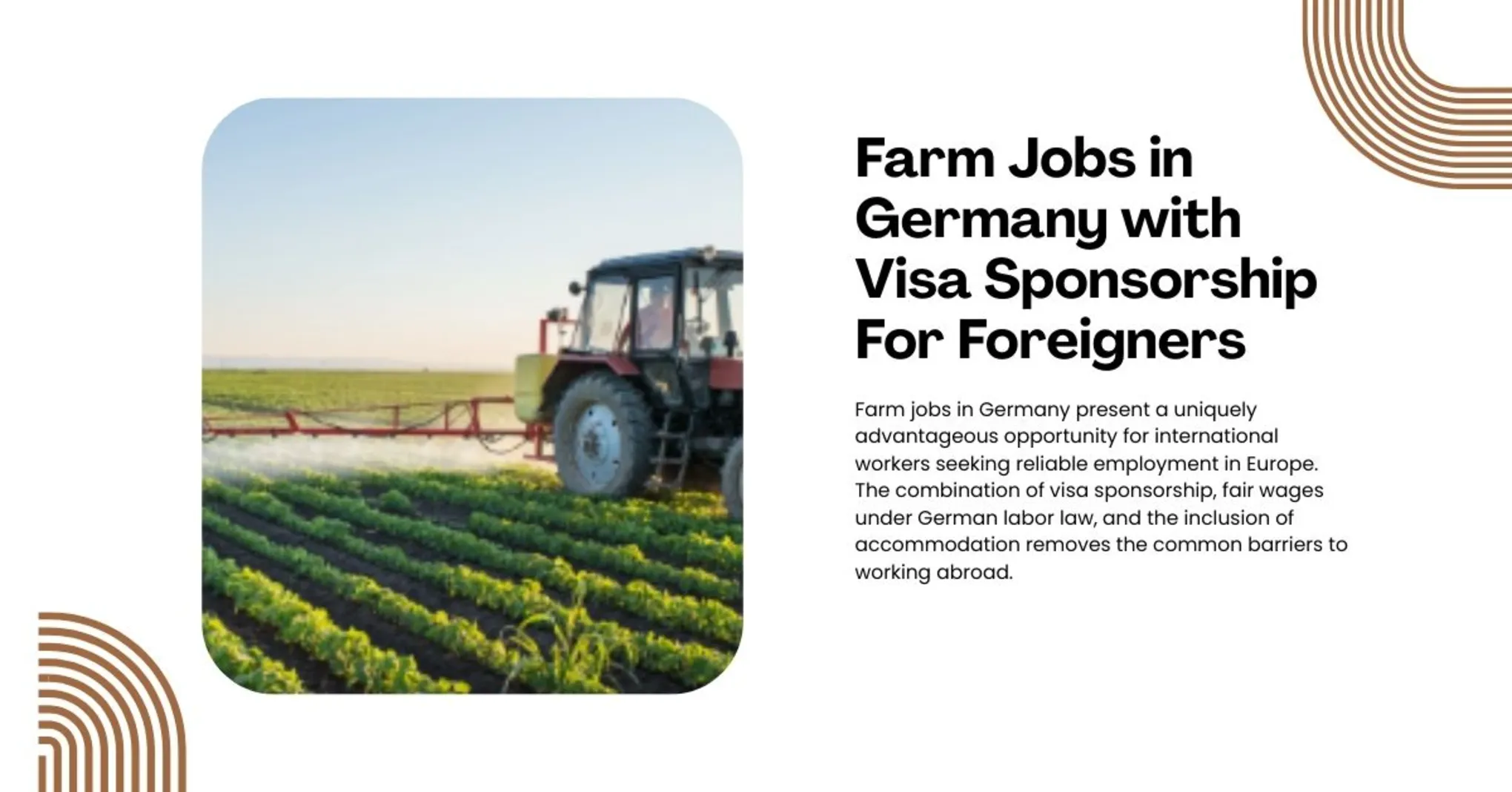
Imagine starting each day in the picturesque German countryside, contributing to one of the world’s most advanced agricultural sectors while building a secure future. For those with a strong work ethic and a desire for adventure, farm jobs in Germany for 2026 offer a unique blend of professional stability and cultural immersion.
With visa sponsorship, a competitive hourly wage of €10.50-€14.00, and benefits like often free accommodation, this is your accessible pathway to legal employment in the heart of Europe. No prior experience? No problem. Germany’s innovative farms provide training, offering you not just a paycheck but valuable skills and memories that will last a lifetime. Your journey of growth and discovery begins here.
Read Also: Agricultural Farm Jobs in Germany with Visa Sponsorship
Understanding the Roles and Realities
Farm work in Germany is physical and demands reliability, but it is conducted within a strict legal and safety framework.
Common roles include:
- Seasonal Harvesting: Picking fruits (asparagus, apples, grapes, strawberries) and vegetables, which is highly seasonal from spring to autumn.
- Livestock Assistance: Supporting the care of cattle, pigs, or poultry, including feeding, cleaning stables, and monitoring animal welfare.
- Dairy Farm Work: Assisting with milking routines, feeding herds, and maintaining milking parlour hygiene.
- Greenhouse Cultivation: Working in controlled environments to plant, nurture, and harvest flowers, herbs, and vegetables.
Eligibility and Key Requirements
To be considered for a sponsored position, you must typically meet these criteria:
- Age and Health: Be at least 18 years old and in good physical condition for demanding manual labor.
- Work Ethic: Demonstrate reliability, punctuality, and the ability to work effectively in a team.
- Basic Language Skills: While not always fluent, basic German is a significant advantage for safety, daily instructions, and integration. English may be sufficient on some larger, international crews, but should not be relied upon.
- Legal Eligibility: A valid passport and a clean criminal record.
Prior farm experience is beneficial but not always mandatory, as many employers provide on-the-job training.
The Visa Sponsorship Reality
The primary visa route for seasonal agricultural work is not a general “Work Visa” but the specific Seasonal Agricultural Worker Visa.
Here’s how the process generally works:
- Secure a Job Contract: You must have a formal offer from a German employer who is approved to hire seasonal workers from outside the EU.
- Federal Employment Agency Approval: Your employer must prove to the German Federal Employment Agency (Bundesagentur für Arbeit) that no German or EU citizen is available for the role.
- Apply for a Visa: With the approved contract, you apply for a National (D-Type) Visa for employment at the German embassy or consulate in your home country.
- Register in Germany: Upon arrival, you must register your address (Anmeldung) and may need to apply for a residence permit for the duration of your contract.
Important Note: This visa is typically granted for a maximum of 5-9 months within a 12-month period. It is designed for temporary, seasonal work, not permanent migration.
Salary, Benefits, and Realistic Financial Expectations
It is crucial to have accurate financial expectations. The provided gross salary needs context regarding Germany’s cost of living and tax deductions.
Compensation Overview:
- Hourly Wage: The national minimum wage applies. As of 2024, it is €12.41 per hour and will likely be higher in 2026. Specialized tasks may pay more.
- Monthly Earnings: A full-time role (160-170 hours/month) will have a gross income of approximately €2,000 – €2,500. After deductions for tax and social security, the net income will be lower.
- Accommodation: Employers often provide shared, subsidized housing, which is a significant financial benefit. The cost is typically deducted from your salary.
- Social Security: You will be covered by the German social security system, including health, pension, and unemployment insurance.
Where Are the Jobs Located?
Agricultural jobs are concentrated in regions known for specific types of farming:
- Baden-Württemberg & Bavaria: Orchards, hop farms, and dairy.
- Lower Saxony & Schleswig-Holstein: Livestock and dairy farming.
- Brandenburg & Mecklenburg-Vorpommern: Large-scale crop farming and vegetable cultivation.
How to Apply for Farm Jobs in Germany with Visa Sponsorship
Step 1: Prepare a Clear and Honest CV
- Focus on any experience with manual labor, outdoor work, or teamwork.
- Highlight soft skills: reliability, physical fitness, and willingness to learn.
- Mention any basic German language skills.
- Clearly state: “Eligible for Seasonal Agricultural Worker Visa.”
Step 2: Target Your Job Search Correctly
- Use Official Channels: The safest method is to apply through German recruitment agencies that are officially authorized to place seasonal agricultural workers (Erntehelfer).
- Platforms: Use the official EURES portal and German job boards like StepStone.de and Indeed.de.
- Keywords: Search for “Saisonarbeiter Landwirtschaft,” “Erntehelfer,” or “Aushilfe Landwirt.”
Step 3: Understand the Contract
Before accepting any offer, ensure the contract is transparent and outlines:
- The gross hourly wage.
- All deductions for accommodation, meals, and insurance.
- The specific job duties and contract duration.
- The terms for overtime pay.
Conclusion
In summary, farm jobs in Germany for 2026 present a unique and valuable opportunity for international workers. They combine the security of visa-sponsored, legal employment with the chance to gain hands-on experience in one of the world’s most advanced agricultural sectors.
Beyond the competitive wages and provided accommodation, these roles offer profound cultural immersion and professional development. For those seeking a meaningful career path abroad that values diligence and offers a gateway into Europe, Germany’s farms represent a truly rewarding choice.
Frequently Asked Questions
What is the average salary for a farm worker in Germany?
The average hourly wage for a farm worker in Germany ranges from €10.50 to €14.00. This typically results in a monthly income between €1,800 and €2,400, with potential for overtime pay, especially during harvest seasons.
Do I need prior experience or to speak German?
No, prior experience is not always required, as many farms provide on-the-job training. While basic German or English is helpful for communication, it is not always a mandatory requirement for all positions.