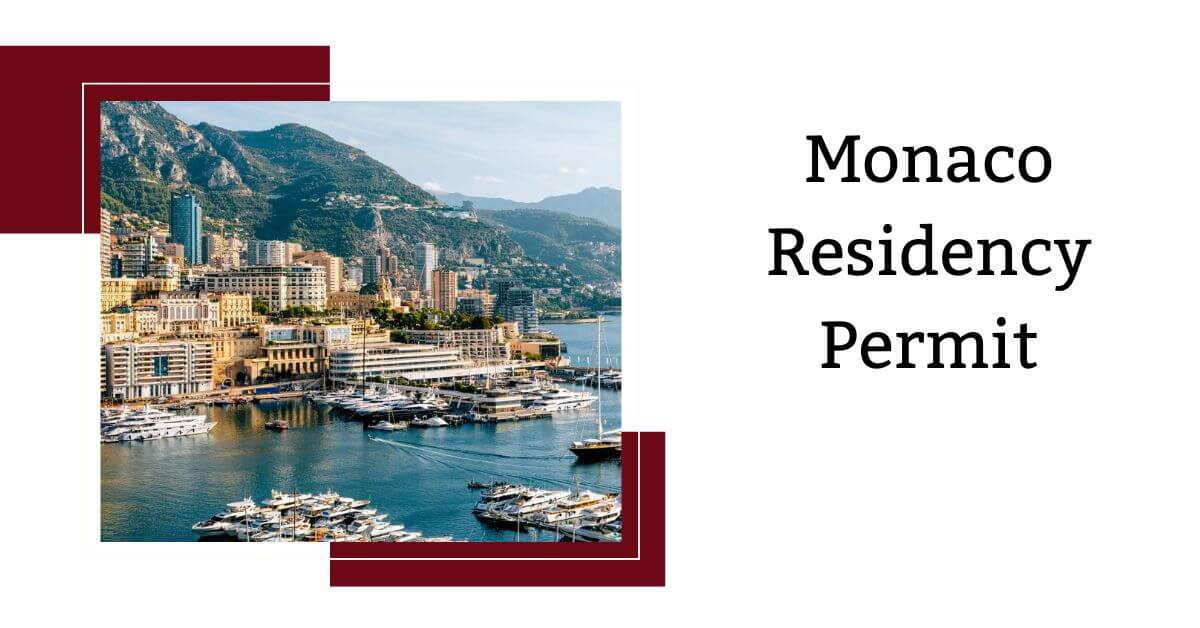
Monaco Residency Permit – How to Obtain Residence in Monaco 2026 offers a comprehensive overview for anyone aiming to establish legal residence in the Principality of Monaco. The guide covers eligibility criteria, necessary documentation, proof of financial stability, housing requirements, and application procedures. It also highlights tips for first-time applicants, the advantages of Monaco residency, and how to maintain compliance with local regulations. Whether for work, business, or personal reasons, this detailed guide ensures you understand the full process of obtaining a Monaco residency permit and enjoy the benefits of living in one of Europe’s most prestigious locations.
The Allure of Monaco: Key Benefits
- Favorable Tax Regime: Monaco does not levy personal income tax on residents (with certain exceptions for French citizens), and there is no wealth tax or capital gains tax on individuals. This is the primary driver for most applicants.
- Political & Economic Stability: Governed as a constitutional monarchy since 1911, Monaco boasts a robust economy and one of the lowest crime rates in the world.
- Prime European Location: Nestled on the French Riviera, Monaco offers visa-free travel within the Schengen Area and excellent connectivity to major European hubs.
- Unparalleled Quality of Life: Residents enjoy a Mediterranean climate, world-class infrastructure, luxury amenities, high-quality healthcare, and exceptional security.
- Privacy and Exclusivity: The principality is known for its discreet banking and a community that values privacy.
The Pathways to Residency:
There is no formal “investment for citizenship” program. Instead, residency is granted to those who can prove financial self-sufficiency, primarily through one of two practical avenues:
- Property Rental or Purchase: You must secure a long-term lease (typically 12 months or more) or purchase property. Given Monaco’s limited size, real estate is premium and serves as the most common proof of establishing a home.
- Bank Deposit: You are required to deposit a minimum of €500,000 into a bank account with a Monaco-based financial institution. You must provide evidence that these funds are available for your living expenses.
Eligibility & Core Requirements:
The application process is rigorous. To qualify, you must:
- Demonstrate Substantial Financial Means: You must prove you have sufficient wealth to support yourself and your dependents without needing employment in Monaco. This is typically demonstrated through bank statements, investment portfolios, or proof of pension.
- Secure Accommodation: Provide a rental agreement or property deed for a suitable residence (studio, apartment, or house).
- Possess a Clean Criminal Record: Provide a recent criminal record certificate from every country you have lived in for the past five years.
- Obtain a French Long-Stay Visa (for non-EU/EEA): Before applying for residency in Monaco, non-EU/EEA nationals must first secure a Long-Stay Visa (Type D) from the French consulate in their home country, as Monaco is surrounded by France and part of the Schengen area.
- Undergo a Personal Interview: All applicants must attend an interview with the Monegasque authorities, who will assess the genuineness of your application.
Application Process of Monaco Residency Permit:
The entire process is meticulous and can take 6 to 12 months to complete.
- Preparation & Document Gathering:
- Collect all required documents: passport, birth certificate, proof of funds, bank deposit confirmation, rental contract, and clean criminal record.
- All foreign documents must be translated into French by a certified translator and apostilled.
- Secure Accommodation and Make Bank Deposit:
- Finalize your property lease or purchase and transfer the required funds to a Monaco bank.
- Apply for a French Long-Stay Visa (if applicable):
- Non-EU/EEA citizens apply at their local French consulate, presenting the Monaco rental contract and proof of funds.
- Submit the Residency Application:
- Once in Monaco, submit the complete application dossier to the Sûreté Publique (Monaco’s Public Security Directorate).
- The Interview:
- Attend the mandatory in-person interview with officials from the Sûreté Publique.
- Receive Your Carte de Séjour (Residence Permit):
- Upon approval, you will receive a temporary residence card, which is renewable annually.
Long-Term Residency & Important Considerations:
- Temporary to Permanent: After three consecutive years of temporary residency, you may be eligible for a three-year card, and after ten years, a ten-year card.
- No Pathway to Citizenship: Residency does not automatically lead to Monegasque citizenship, which is exceptionally rare and granted primarily by sovereign decree after at least 10-20 years of continuous residence and demonstration of deep integration.
- Separate Work Permit: A residency permit does not grant the right to work. To be employed or run a business in Monaco, you must secure a separate work permit, which requires a local company to sponsor you.
Conclusion:
Securing residency in Monaco is a privilege reserved for those who can meet its high financial thresholds and integrate into its unique societal fabric. It is not a simple transaction but a demonstration of commitment to making the principality your primary home. While the process is demanding, the reward is access to an unrivalled lifestyle of security, luxury, and fiscal efficiency in the heart of Europe.
Prospective applicants are strongly advised to engage with experienced legal and financial advisors specializing in Monegasque law to navigate this complex process successfully.
Frequently Asked Questions:
Is it true that there is no income tax in Monaco?
Yes, for the vast majority of residents. Monaco does not levy personal income tax on its residents. The primary exception is for French citizens, who are subject to French income tax under a bilateral treaty.