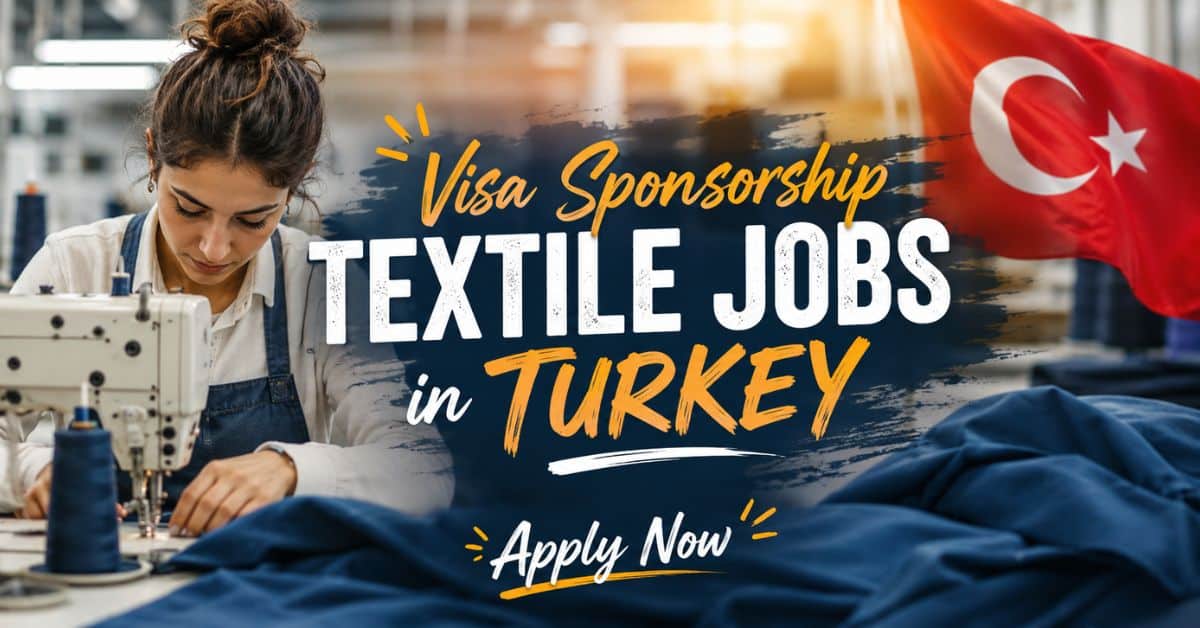
Finding stable work in a new country can feel overwhelming, especially when you’re trying to support your family or build a better future. Textile jobs in Turkey often become a real starting point for many people because they don’t demand high qualifications, just consistency, effort, and a willingness to learn.
Turkey’s textile industry is one of the strongest in the region, supplying fabrics and garments to many international markets. This means factories stay active throughout the year, creating a steady demand for workers in different production roles.
Job Overview:
| Category | Information |
|---|---|
| Position | Textile Worker |
| Country | Turkey |
| Job Type | Full-Time |
| Experience | Not required (basic preferred) |
| Language | Basic English (Turkish is a plus) |
| Salary | ₺15,000 – ₺30,000 per month |
| Visa | Possible (employer-dependent) |
| Accommodation | Sometimes provided |
Where You’ll Be Working?
Because Turkey’s textile sector is so diversified, your workplace will differ based on the job you are offered. Most positions are based on:
- Textile factories and production units.
- Garment manufacturing businesses
- Fabric Processing Plants
- Export and packaging warehouses.
- Small workshop and tailoring units.
Many of these workplaces run on production lines, especially in large factories.
Check Also: Visa Sponsorship Hotel Jobs in Turkey
Types of Textile Jobs Available
Textile jobs are not limited to one role. You may find opportunities such as:
- Sewing machine operator
- Fabric cutter
- Packing and labeling worker
- Quality checker
- Ironing and finishing staff
- Textile production assistant
Some roles require experience (like machine operation), while others are beginner-friendly.
What will you be doing daily?
Textile jobs are usually repetitive but easy to learn. Your daily tasks may include:
- Operating sewing or textile machinery.
- Cut and shape cloth stuff.
- Packaging finished clothing
- Checking the product quality
- Maintaining cleanliness in the workplace
- Meeting the daily production targets.
Most work is done indoors in factory environments.
Skills and Requirements:
Even though many textile jobs are entry-level, employers still expect basic discipline:
- The ability to follow instructions
- Good hand-eye coordination.
- Basic English Communication
- Willingness to work extended hours
- Physical endurance for standing employment.
For higher-paying roles, machine operation skills or previous factory experience can help.
Salary and Working Hours:
Textile salaries in Turkey depend on your role and experience:
- Entry-level workers: ₺15,000 – ₺20,000/month
- Skilled workers: ₺20,000 – ₺30,000/month
- Overtime: Often available
Typical working schedule:
- 8–10 hours per day
- 5–6 days per week
Keep in mind that wages in Turkey are lower than in Western Europe, but the cost of living is also reasonable.
Benefits:
1. Easy Entry for Beginners
Textile jobs are suitable for people with no prior experience. Most roles are simple to learn on the job, so you can start working quickly without needing special qualifications or technical training.
2. Steady Monthly Income
Workers receive a fixed monthly salary, which helps in managing daily expenses. In many factories, overtime work is also available, giving you a chance to earn extra money depending on your effort and working hours.
3. Accommodation and Basic Support
Some employers provide accommodation or basic facilities like transport or meals. This support can reduce living costs and make it easier for foreign workers to settle in a new place.
4. Job Stability in a Growing Industry
Turkey’s textile sector runs throughout the year, supplying products to global markets. This creates continuous demand for workers, offering more stable and long-term employment opportunities.
5. Skill Development and Experience
Even simple factory roles help you learn discipline, teamwork, and production skills. Over time, you can gain experience in machine operation, quality control, or other technical tasks, which may lead to better job positions.
How to Apply for Visa Sponsorship Textile Jobs in Turkey?
If you want to apply for textile jobs in Turkey, follow these steps:
- Create a short CV that includes your personal information and any manufacturing or textile experience.
- Search online with keywords like “Textile Jobs in Turkey with Visa Sponsorship 2026”.
- Apply through official company websites or reputable recruitment agencies.
- Consider applying directly to textile companies in cities like Istanbul or Bursa.
- Attend interviews and present the relevant documentation.
- Apply now by uploading your CV on verified employment sites or by contacting textile firms in Turkey that offer visa sponsorship opportunities.
Conclusion:
Textile jobs in Turkey offer steady full-time work with no strict experience requirements, making them accessible for many job seekers. They involve factory-based roles like sewing, packing, and quality control, with decent monthly income and possible overtime. Overall, it’s a practical opportunity for those seeking stable employment and a simple way to start building financial independence.
Frequently Asked Questions:
What is the average salary for textile jobs in Turkey?
The average salary for textile workers in Turkey ranges from ₺15,000 to ₺30,000 per month, depending on experience, skills, and job role. Overtime work can also increase total earnings.
Do I need experience to apply for textile jobs?
No, most textile jobs are entry-level and do not require previous experience. Basic training is usually provided at the workplace.
Is visa sponsorship available for foreign workers?
Visa sponsorship is possible but not guaranteed. It depends on the employer’s requirements and whether they are willing to hire international workers.